Learn the boli

How much Sindhi do you still know?

The words for days, months, animals and vegetables, in our own boli. Play a quick round and see how many you actually remember.

Or take the How-Sindhi-Are-You test ↓ Looking for your surname? Open the Finder →

Why I am building this

Hi, I’m Mohit Mordani

I’ve been so busy getting these stories to you that I forgot to say who I am, or why this page came to life.

WhySoSindhi is everything I was never taught, every story that was almost forgotten, gathered so the next Sindhi kid doesn’t wait until college to feel proud. Some days it doesn’t even feel like mine. More like I was handed it, and asked to be a bridge.

Because this isn’t just a page. If you’re Sindhi and feel adrift, you’re home now. If you’re curious, welcome in. If you want to help keep this alive, let’s build it together. This is just the beginning.

A small movement, to bring our culture out of the margins, to turn shadows into a legacy.

Follow the journey on Instagram →
The movement

One Instagram page woke a community up.

WhySoSindhi started as posts about our words and our names. Seven months later, followers send in their surnames, correct our spellings, and write their family stories back.

Dec 2025 Today 71.6K
0
Followers
0
Months
0
Surnames sent in by followers
Follow the journey · @whysosindhi

Every DM read. Every name chased down.

The land they remember

Sindh, before the lines moved

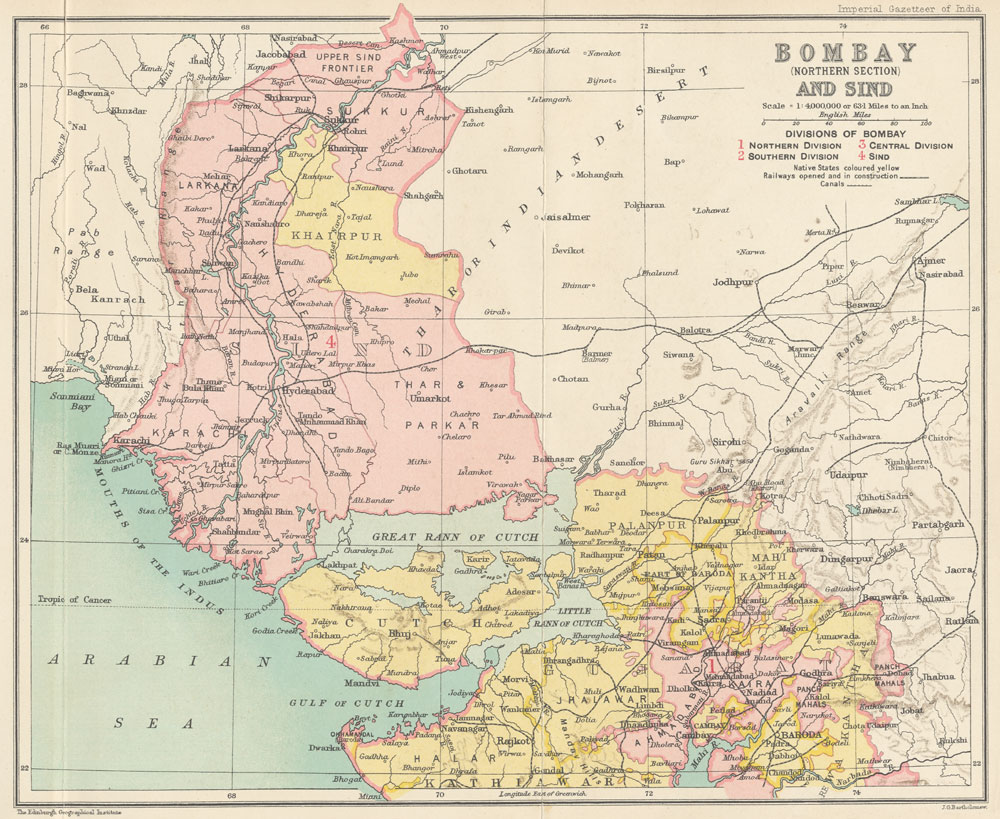
The districts our families name Hyderabad, Karachi, Shikarpur, Sukkur, Larkana, Khairpur, Thar & Parkar, as they were mapped before Partition. When an elder says “we were from there,” this is the there.

1909 Imperial Gazetteer map of Sind showing its districts before Partition
Map: Bombay (Northern Section) and Sind, Imperial Gazetteer of India, c. 1909 (public domain). Surfaced via the Sindhi Saaz Foundation.

About this project

A letter to a land I've never seen

Dear Sindh,

I have never seen your river, nor stood in your morning light. The lanes my grandparents walked are only names to me now. And yet you are here. You are in a word my mother says without thinking, in the food we make on festival days, in the shape of my own name.

I did not know it was possible to miss a place you have never been. You taught me that it is. So I go looking for you in old books and older stories, and I write down whatever I find, in case someone else is looking too.

720+
Surnames documented
40+
Lineage categories
1947
Year of the great migration
Stories still untold

The Sindhi test

How Sindhi are you, really?

Everyone assumes they'd ace it. Seven quick questions, one honest score, and a little surprise about your own surname at the end.

Think you're a proper Sindhi?

Prove it. Seven quick questions, one honest score, and a little surprise about your own surname at the end.

7 questions · under a minute · no sign-up

Just here for your surname? Skip to the finder

Questions, answered

About Sindhi surnames

What does a Sindhi surname mean?

Most Sindhi surnames end in -ani, a patronymic that means “of the line of” an ancestor. So Advani traces back to a forefather like Adumal, Gidwani to Gidumal, and so on. A surname often also carries the family’s clan (nukh), caste, and the town in Sindh they came from.

What is a nukh?

A nukh is a Sindhi clan or sub-lineage within a caste. Two families can share the same surname but belong to different nukhs, so the nukh is one of the oldest and most precise ways Sindhis trace kinship.

Where did Sindhi Hindus come from?

From Sindh, today a province in Pakistan. After the 1947 Partition most Sindhi Hindus migrated to India and across the world, carrying their language, food and surnames while leaving the land itself behind.

Is this surname information verified?

Every record is compiled from real historical books and public sources, and cited wherever possible. Where a detail is not confirmed in a reliable source, the archive marks it “Not verified yet” rather than inventing it.

Tap for added magic ♪